
Fraud prevention and contact verification
Is the requested action legitimate?
Pause payment, document transfer or remote access. Reconnect through a known channel found outside the received message.



Free bilingual library
Find the right guide for fraud prevention, evidence checking, incident response or due diligence. Filter the bilingual library and use local verification tools.
Is the requested action legitimate?
Pause payment, document transfer or remote access. Reconnect through a known channel found outside the received message.
What precise fact does the available material establish?
Retain the original, URL, collection time and context. Separate observation, publication time and claimed event time.
What is exposed, who owns it and what must happen first?
Assess active harm, alert the responsible team and preserve minimal useful evidence. A technical compromise requires technical response alongside public-source analysis.
Which unresolved claim could change the decision?
Identify the exact entity and transaction, then rank the material claims to test. Use stable identifiers before linking people, proceedings or companies.
Detailed methods
25 guides

OSINT guide · 9 min
Method guide · 8 min
Cyber guide · 10 min

Decision guide · 11 min
Media guide · 12 min
Response guide · 10 min
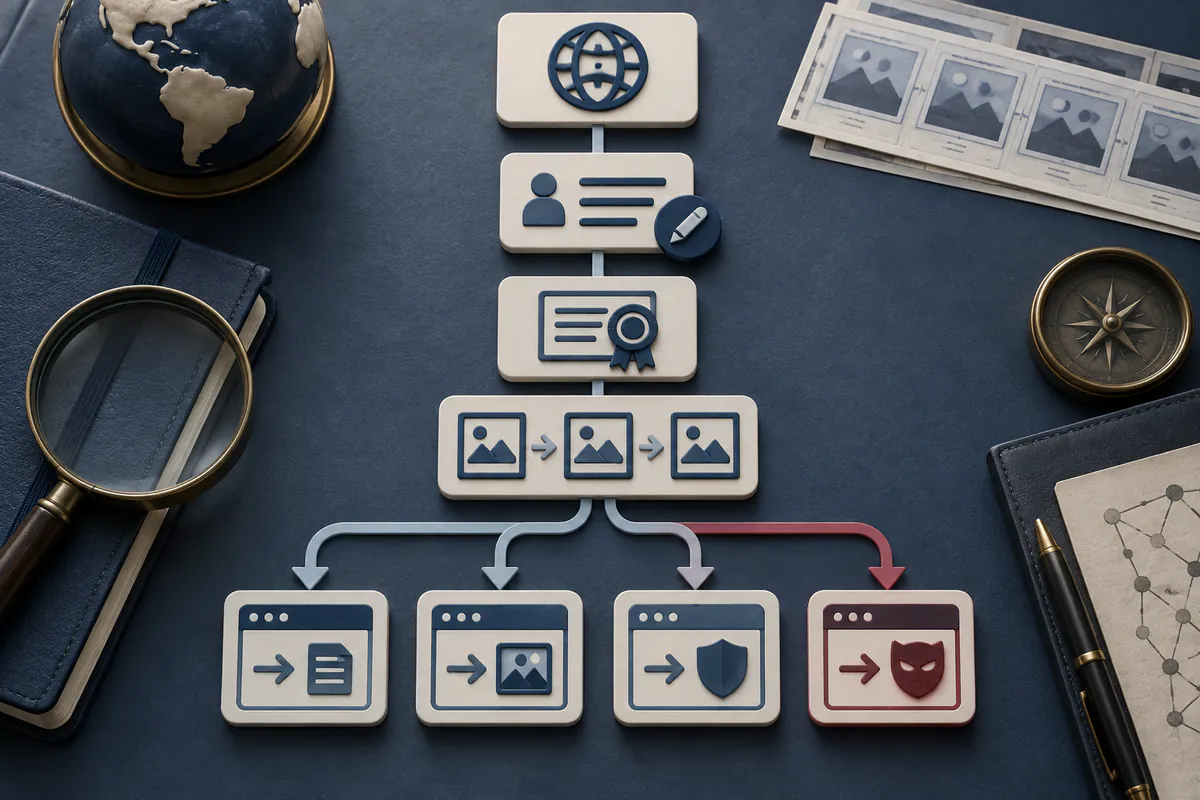
Web fraud guide · 11 min
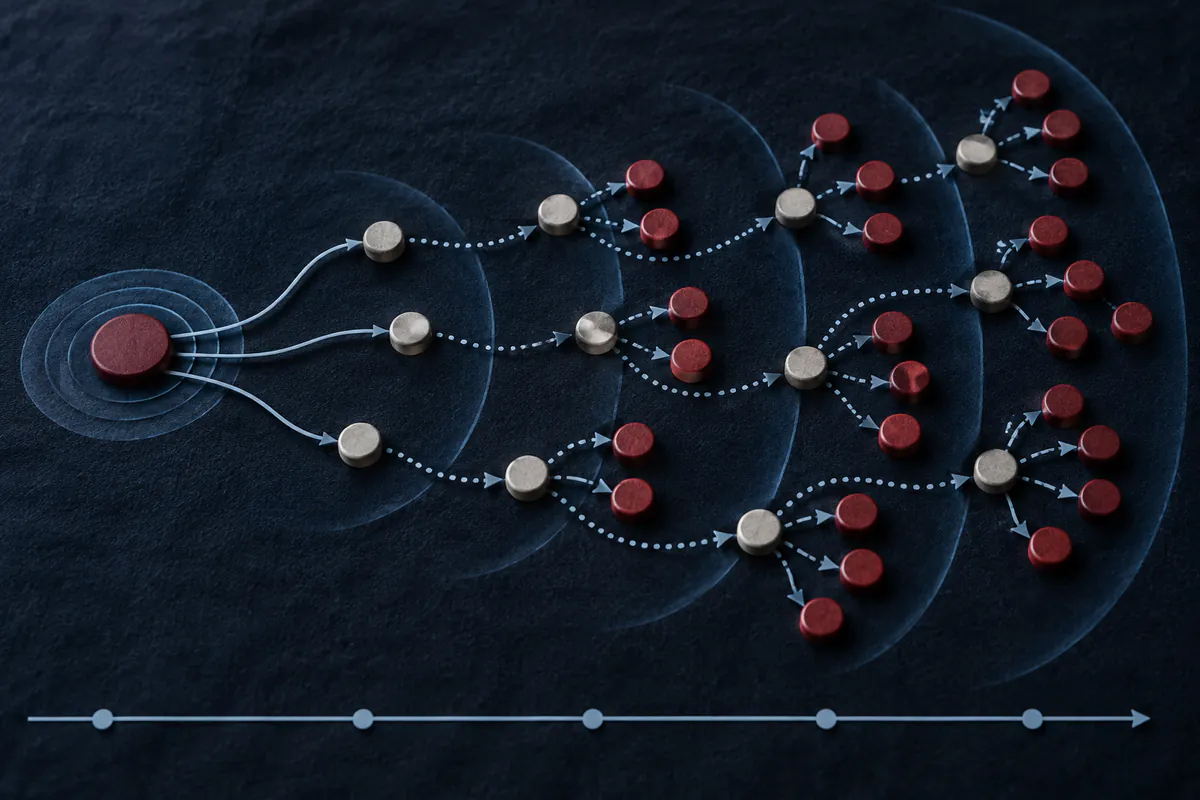
Influence guide · 12 min

Fraud guide · 11 min
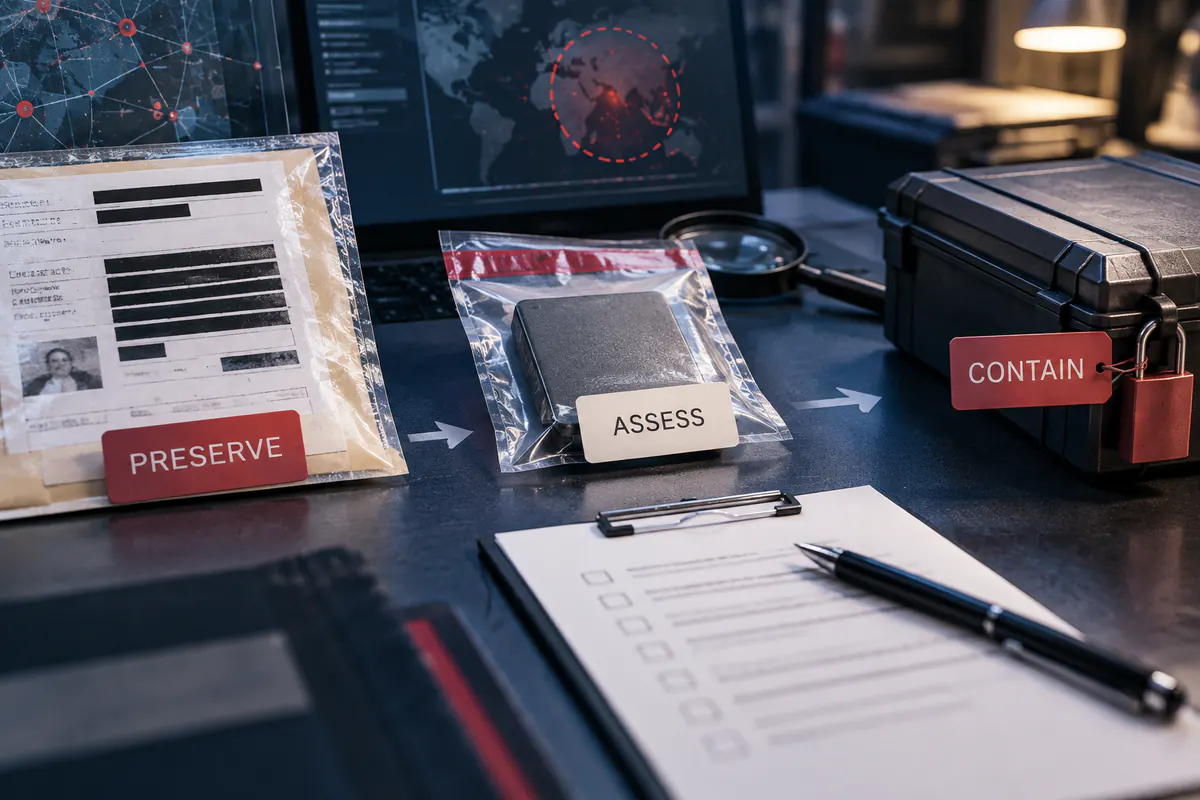
Incident guide · 12 min

Due diligence guide · 13 min
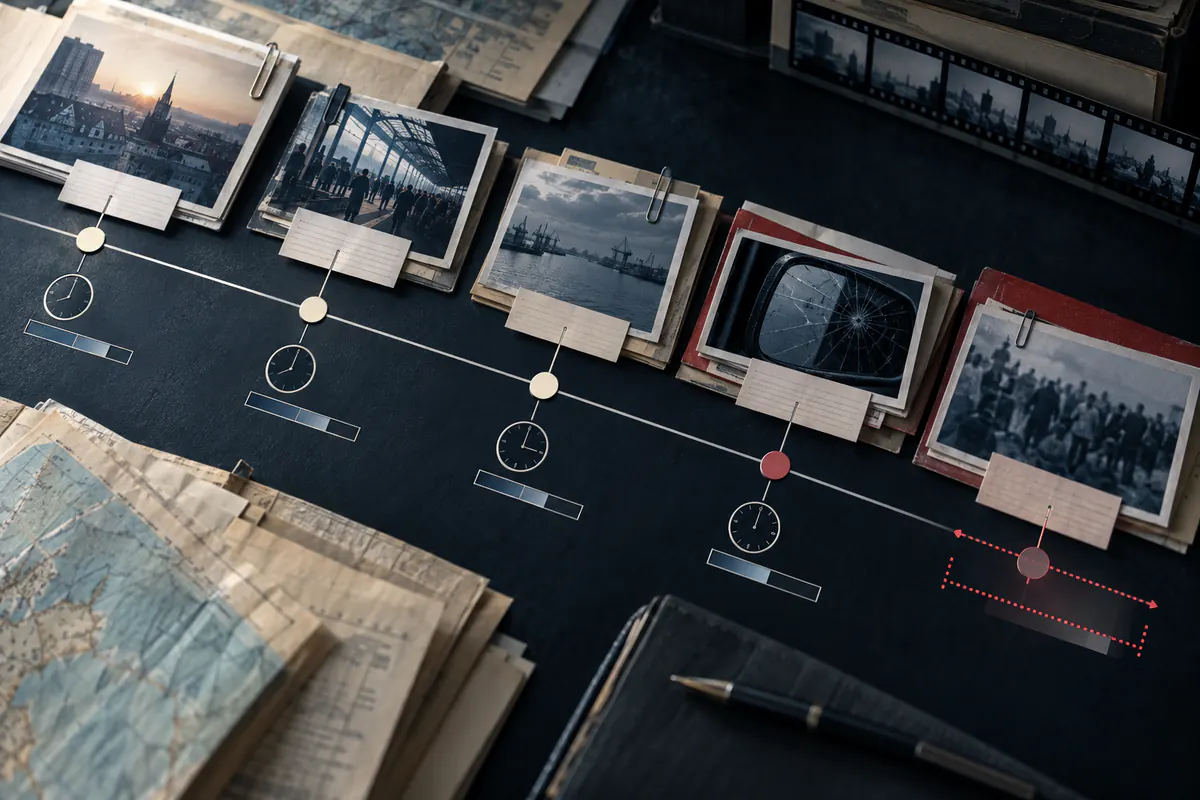
Method guide · 12 min

Infrastructure guide · 14 min

Fraud guide · 12 min
Reputation guide · 13 min

Protection guide · 13 min

Verification guide · 12 min

Payment fraud guide · 12 min

Support impersonation guide · 12 min

Sources, methods, source logs and interpretation

Response guide · sessions and access

Verification guide · claims and citations

Guide · capture, publication, event and limits

Guide · identity and current sources

Guide · CVSS, KEV and EPSS
No matching guide. Try another term or reset the filters.
Extract the actual host and spot misleading prefixes or parameters. Parsing does not establish that a site is safe.
Convert two dates with explicit offsets to UTC and calculate their difference. No timezone is assumed.
Check byte-level correspondence locally. A matching hash does not establish authorship, publication date or truth.
Find an external source in the OSINT directory → · Record findings in the verification log
Compare the scope before comparing values. Statistical observations, editorial methods and terminology answer different questions. Each reference retains its source context and interpretation limits.
Bilingual, filterable glossary of 100 OSINT, evidence, identity, infrastructure, risk, influence and response terms.
Filter 75 practical digital verification checks across six categories. Bilingual editorial reference with purpose and interpretation limits.
A bilingual, filterable reference for first actions, evidence to preserve and escalation across 28 digital incident scenarios.
Primary sources for company, domain, payment, cybersecurity, privacy and AI checks, with jurisdictions, limits and dated references.
Interactive bilingual matrix for assessing provenance, independence, freshness and evidential value across 32 public-source types, with interpretation limits.
Editorial selection of external services and resources, described using their portals or documentation. References reviewed on 3 October 2026; availability, prices, quotas and interface languages can change. Subscriptions and paid features were not tested.
A sourced observatory of ANSSI, ENISA and Cybermalveillance.gouv.fr 2025 indicators, with methodology and comparative tables.
Selected published values. The period overlaps the 2025 edition; the two editions do not form a directly comparable series. The 2026 NIS2 categories combine essential and important entities.
Compare a retained file with a SHA-256 reference in the local verification log →
Compare the observations, missing evidence and bounded conclusion →
The guides describe defensive, lawful verification methods. The data pages distinguish official observations from editorial reference frameworks. Their sources and limits remain on the relevant page.
Editorial responsibility and corrections →