

Keep these fields in the source log
- Publication URL and account
- File version and keyframes
- Candidate origins and contextual differences


Public research resources · FR / EN
Does this media match the claimed place, date and narrative ? Practical method, external tools, source log and interpretation limits.
External services · no results hosted here · queries sent only when you click a provider link.


A detector, compression anomaly or visual match is insufficient for a conclusion. An authentic image can be presented in a false context.
Entries draw on the providers’ portals or documentation. Each entry shows its latest review date. Check the provider for current access conditions, pricing and quotas.
All words must match. Word order, accents and case do not matter.
5 entries displayed

Compare an image with web occurrences and read visible signs or text.
Limit: Similarity proves neither a person’s identity nor a location; inspect the sources.
Record reviewed

Locate indexed occurrences of an image and compare versions.
Record the page URL and compare any crops or edits. The ‘first found on’ date records when TinEye crawled the image. Check the publication date on the matched page.
Limit: The earliest indexed occurrence is not necessarily the original; no result is inconclusive.
Publisher reference · Record reviewed

Search for similar images and visual elements within a photograph.
Limit: Automatic suggestions need corroboration; the interface may redirect by country.
Record reviewed

Access video, keyframe and publication-context verification tools.
Record the video URL and the playback time of the selected keyframe. Compare captions and surrounding footage before linking the video to an event.
Limit: Some functions require an extension or third-party service; no detection is standalone proof.
Record reviewed

Examine noise, clones and other technical cues in an image.
Limit: Compression, resizing and legitimate editing may produce anomalies.
Record reviewed
No matching catalogue entry. Try another term or reset the filters.




Reading technical evidence
SHA-256 produces a 256-bit digest, represented here by 64 hexadecimal characters. It is calculated from the file’s bytes.
| Observed item | What it means |
|---|---|
| Renamed copy | The name is not part of the calculation; the content can retain its hash. |
| Recompressed image or resaved document | Bytes may change even when the document looks identical. |
| Hash calculated today | It proves neither creation date, authorship nor authenticity of the scene. |
Record algorithm, digest, file and collection context. Compare against a reference retained separately.
Read the original record
C2PA information concerns provenance and declared operations. Technical validation alone does not establish that a depicted scene is true.
| Item | Record to retain | Limit |
|---|---|---|
| Examined file | Exact file version and tool used. | Cropping or a platform copy can lose information. |
| Provenance | Signer, declared actions and the exact validation result. Record the tool name and version. | Log an absent credential, an untrusted signer or a failed integrity check as distinct observations. |
| Context | Location, time and caption corroborated separately. | Missing credentials do not prove AI generation. |
Reading exercise · fictional scenario
Reverse search finds the identical photograph published two years before the current post. The older caption describes another event.
Before opening the explanation, separate what is observed from what is inferred. Identify the missing check that prevents the broader conclusion.
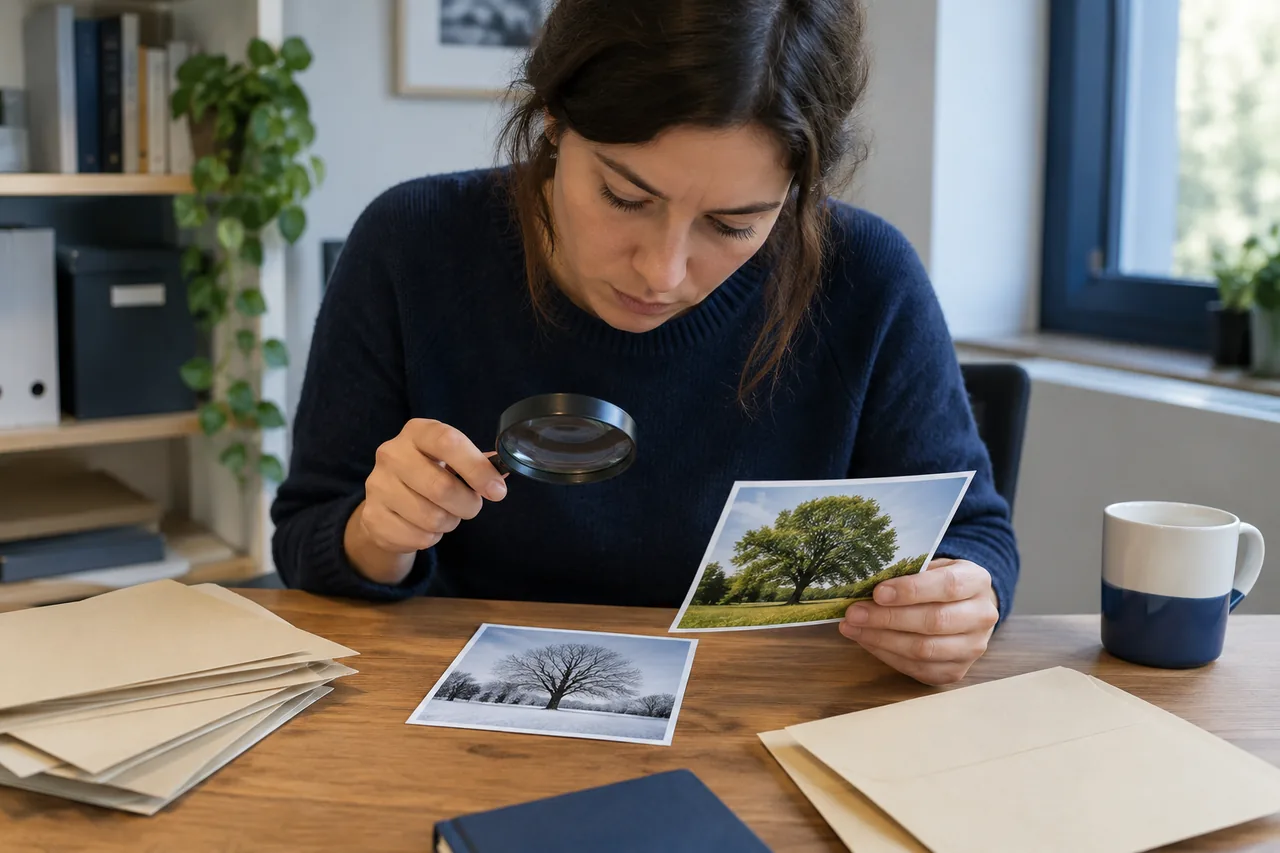
The image is fake and the whole post is false.

The image predates the post and its older caption concerns a different event. This contradicts its use as a photograph of the claimed event.

Compare the complete image and its variants; check the event and publisher identity separately.
This exercise illustrates an interpretation error. It describes no real person, organisation or client case.
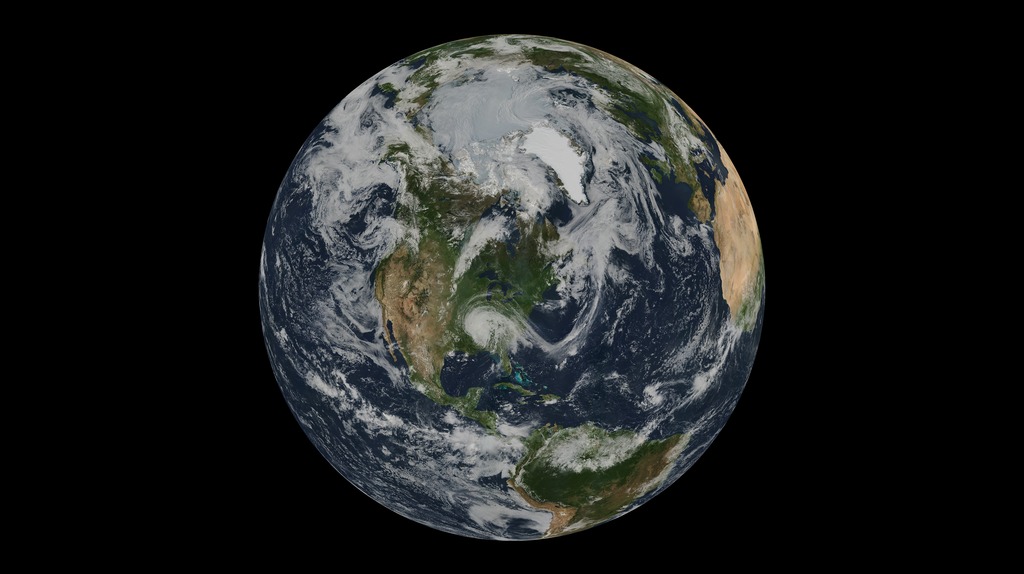
Blue Marble 2002 combines satellite observations collected at different times. Its land and coastal-ocean imagery uses observations from June to September 2001; its cloud layer combines two days of MODIS imagery. The title year does not date every visible feature.
For an image review, distinguish the observation period, assembly method and publication date. A composite can faithfully illustrate a documented dataset while providing no single instant for dating an event.
On the selected provider’s website, in a new tab. IIS does not retrieve, host or display investigation results. Directory filters only filter the editorial catalogue.
The launchpad builds links inside your browser, without sending the query to IIS or storing it in browser storage. Clicking a prepared link sends the query to the named provider, under its own rules.
No. Access may require an account, subscription, software or quota. The catalogue is available in French and English; providers set their interface languages, coverage and conditions.
No. Index coverage, spelling, language, access limits and capture dates can explain a missing result. Record what was searched and what remains unknown.